
Posted At: May 02, 2026 - 410 Views
Novec 1230 Fire Suppression System: Comprehensive Guide for Installation, Maintenance, and Refilling
The Novec 1230 Fire Suppression System is one of the latest clean gaseous fire suppression systems. It relies on a non-conductive liquid that reduces oxygen levels and absorbs heat to extinguish fires quickly. This system is capable of suppressing fires within seconds while lowering the temperature in the affected area to below 35°C.
The Novec 1230 Fire Suppression System consists of two main components:
Smart Control Unit: Monitors and evaluates fire conditions via temperature, smoke, and gas sensors.
Cylinders: Release inert gas into the affected area upon detecting an imminent fire hazard.
Difference Between FM200 and Novec 1230
Both FM200 and Novec 1230 are among the most common gaseous fire suppression agents in industrial applications. Below is a table highlighting the key differences between them:
| Criteria | FM200 | Novec 1230 |
|---|---|---|
| Chemical Composition | HFC-227ea (Hydrofluorocarbon) | Fluoroketone Liquid |
| Environmental Impact | ODP=0 but high GWP | ODP=0 and very low GWP (99.9% lower) |
| Extinguishing Time | Less than 10 seconds | Less than 10 seconds |
| Temperature After Release | Safe for equipment | Reduces temperature below 35°C |
| Human Safety | Safe at appropriate concentrations | Safer with higher safety margin |
| Atmospheric Lifetime | Relatively Long | Short (days instead of years) |
✅ Advantage of Novec:
Novec 1230 excels in environmental compatibility and human safety, making it the optimal choice for sensitive facilities like:
Server rooms
Museums
Hospitals
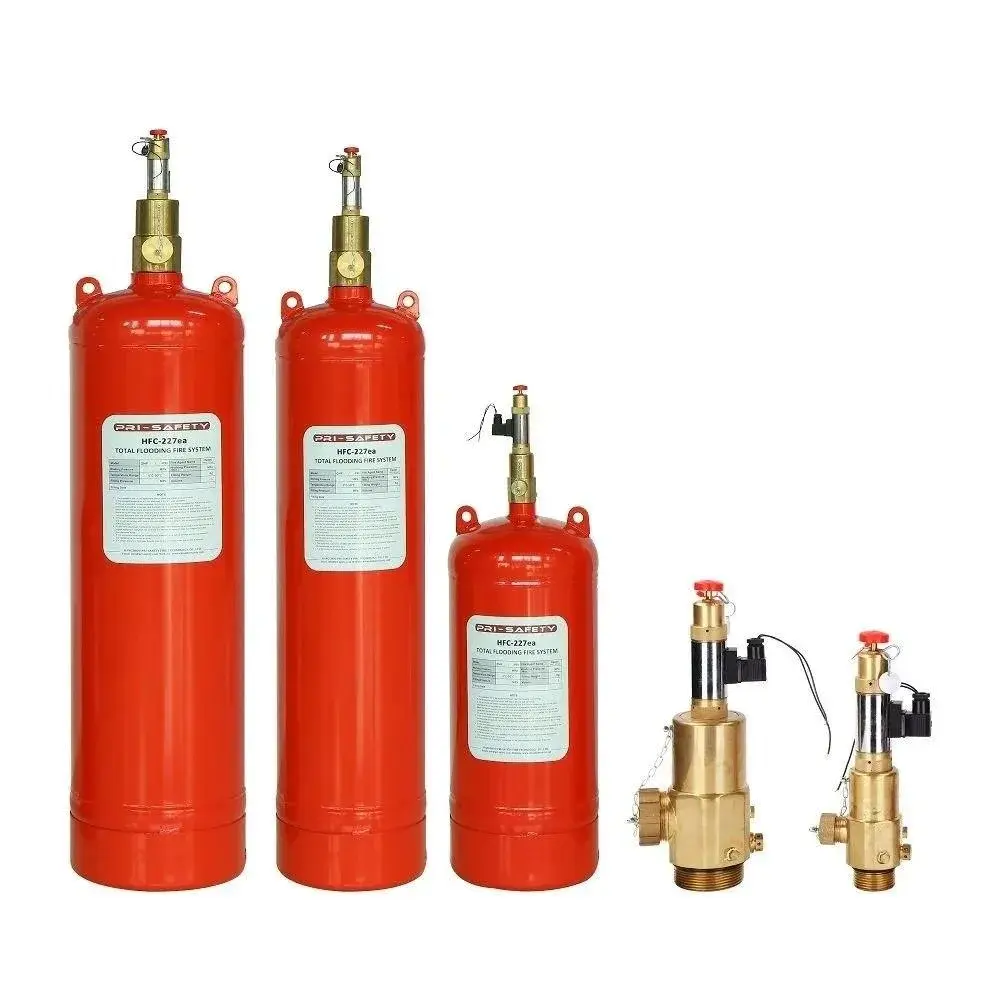
Components of the Novec 1230 Fire Suppression System
The Novec fire suppression system consists of five main components, each contributing to the system's overall success:
| Component | Description |
|---|---|
| Cylinders | Store pressurized Novec liquid |
| Tanks | Made of high-quality materials to withstand pressure |
| Valves | Control the precise release of gas |
| Nozzles | Distribute gas evenly across the protected area |
| Detection Devices | Provide early detection of smoke, heat, and flames |
When all five components are correctly installed, the Novec 1230 Fire Suppression System can effectively control and suppress fires, minimizing damage and ensuring the safety of people and equipment.
Refilling the Novec System (Novec Refilling)
Refilling the Novec 1230 Fire Suppression System is essential to maintain its effectiveness after any discharge or leakage.
Steps to refill a Novec cylinder:
| Step | Description |
|---|---|
| 1. Inspect the Cylinder | Ensure there is no damage or corrosion |
| 2. Release Residual Pressure | Safely, following standard procedures |
| 3. Clean the Cylinder | Remove any residue or contaminants |
| 4. Refill with the Specified Amount | Using original Novec gas |
| 5. Pressure Test | Ensure there are no leaks |
| 6. Reinstall Valves and Nozzles | Document the refilling process |
⚠️ Important Note: Refilling the Novec 1230 Fire Suppression System requires specialized knowledge and skills. It should only be performed by certified technicians.
Periodic Maintenance Schedule for the Novec System
According to Saudi Civil Defense requirements, the following maintenance schedule is recommended:
| Procedure | Frequency |
|---|---|
| Visual inspection of cylinders & valves | Monthly |
| Inspection of control panel & detectors | Monthly |
| Alarm system & manual operation test | Every 6 months |
| Pressure check in cylinders | Every 6 months |
| Nozzle inspection & blockage check | Annually |
| System refilling after any discharge | Immediate |
| Comprehensive Civil Defense-approved test | Every 3 years |
Advantages of the Novec 1230 System
The Novec 1230 Fire Suppression System offers numerous advantages compared to traditional fire suppression systems:
| Advantage | Explanation |
|---|---|
| Non-conductive | Completely safe for sensitive electronic equipment |
| No residue | No cleanup required after discharge |
| Safe for humans | Can be used in occupied areas |
| Eco-friendly | No impact on the ozone layer and short atmospheric lifetime |
| Easy installation | Requires minimal infrastructure modifications |
| Low maintenance | Compared to other systems |